

Safety leadership and the lessons still going unlearned
Introduction
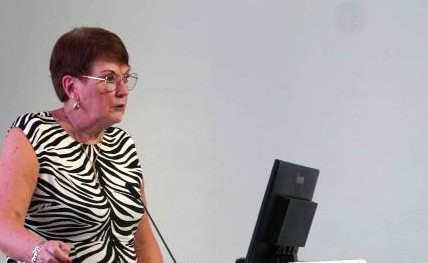
At our event at the Institution of Civil Engineers in London on 23 September 2026, Dame Judith Hackitt asked a question for all safety leaders: are we really making progress? For this year’s Annual Lecture, we partnered with the Institution of Mechanical Engineers (IMechE), bringing together our Annual Lecture and IMechE’s Hugh Ford Prestige Lecture in one joint event. An online audience also joined those attending at One Great George Street.
Exploring safety leadership as a moral and ethical responsibility, Dame Judith acknowledged the considerable improvements made during her career. Yet organisations continued to repeat failures they should already know how to prevent. Her accounts of decisions made under pressure challenged us to consider what it takes to turn knowledge into safer working practices.
Key themes and discussions
Being honest when the consequences are uncomfortable
Dame Judith recalled investigating an incident in which an operator was seriously injured while using a scaffold pole to clear a blockage in a rotating drum. Her investigation revealed that a supervisor and commissioning engineer had known about the unsafe practice for several days. When her managing director pressured her to reconsider her report, Dame Judith refused to conceal their prior knowledge of the practice. The company was prosecuted, but she has never doubted her decision to report what she had found. As Judith told the audience: “If we do not admit our mistakes, we cannot learn from them.”
Looking beyond the immediate cause
During her time leading the Health and Safety Commission and subsequently the Health and Safety Executive (HSE), Dame Judith saw around 1,000 fatality reports. She could not recall encountering anything new or unexpected, raising difficult questions about why lessons failed to travel between organisations, or even between sites within the same company.
The 2005 Buncefield explosion illustrated the problem. A faulty level gauge led to a tank overflowing, but the fault had been known about for months. While waiting for repairs, operators had brought in an alarm clock to time transfers. An investigation that stopped at the faulty equipment would miss the wider failure: why had a reported problem remained unresolved? Audience discussion returned to the need to examine these underlying causes and recognise lessons from other sectors.
Taking responsibility beyond compliance
Following the Grenfell Tower fire, Dame Judith’s independent review of building regulations and fire safety found fragmented responsibility and poorly enforced rules. Many people had already known the system was broken yet concentrated on their own tasks without connecting them to the purpose of providing safe buildings.
She acknowledged the continuing need to remove cladding from affected buildings, while warning that this alone would leave deeper failures unexamined. Construction had made substantial progress in protecting people on site, but the same duty of care had not extended to occupants. Professional responsibility required industry to work with regulators on solutions and act without waiting to be told exactly what compliance should look like.
Making it safe to challenge accepted thinking
Drawing on her experience as one of very few women on her engineering course, Dame Judith connected inclusion with better safety leadership. Valuing different perspectives helped organisations question established assumptions. Leaders needed to make it safe for people to raise concerns and ensure those concerns influenced decisions. A monthly review of past safety performance could not, on its own, provide that understanding.
Call to action and next steps
The lecture and audience discussion pointed to several actions for safety leaders:
- Look beyond the immediate cause of an incident to understand why warnings were missed or problems left unresolved.
- Share learning across sites and sectors, questioning assumptions that another organisation’s failure could never happen in your own.
- Support people who raise concerns, including when their evidence challenges colleagues or senior management.
- Take responsibility for everyone affected by your work, including those who will use or occupy what you design and build.
Conclusion
Our Annual Lecture left us with a demanding measure of progress: whether lessons have changed how organisations behave. With Grenfell’s tenth anniversary approaching, Dame Judith returned to what the professions owe those who died and everyone still living with the consequences. Her challenge was to admit mistakes honestly and have the courage to act on concerns, especially when doing so is uncomfortable.
