
Risk, Regulation and Innovation: What needs to change?
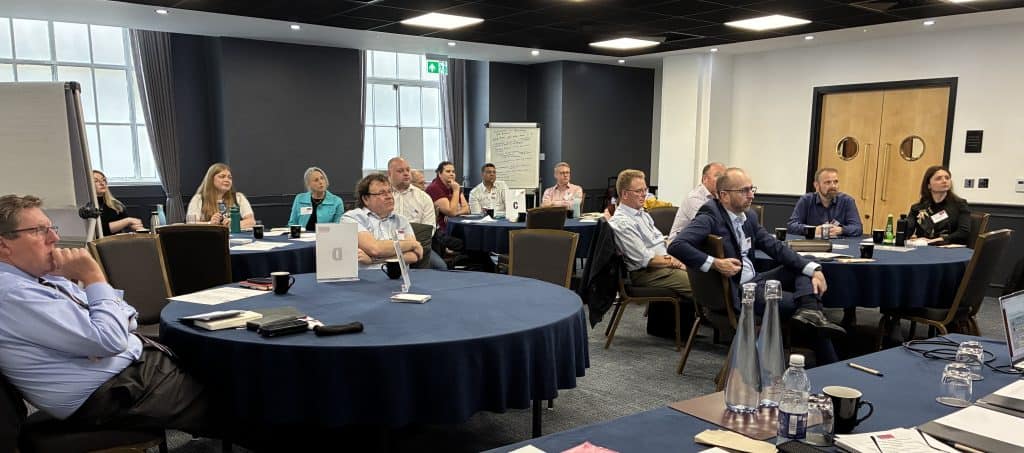
In November 2025, the Nuclear Regulatory Review described a sector preoccupied with paperwork at the expense of real safety and deeply conservative in the face of innovation. The Prime Minister called it a mindset of process over outcome and asked for the lessons to be applied across the industrial strategy. In June we brought together around 30 senior practitioners from across the major hazard industries and the bodies that regulate them, to test whether this diagnosis can be applied to other sectors.
There was no argument raised for less regulation. In our session, we discussed a system in which requirements accumulate without older ones being removed, and in which regulation responds to accidents rather than anticipating technology. It appears, the effort in demonstrating safety is starting to drift away from the work of achieving it. Three areas in particular came through as needing further work during our discussions.
Make interpretation consistent enough that duty holders can push back
ALARP is increasingly understood to mean as low as the regulator will permit, rather than as low as is reasonably practicable. This moves the driver of risk reduction from the duty holder to the regulator, and over-compliance may be the rational response. Operators who ask a regulator for clarity are sometimes told that only a court can settle the point. The same installation, assessed by different inspectors at different times, produces different conclusions. The cost of getting it wrong falls on the operator alone, so there is little incentive to challenge the regulator’s interpretation.
Standardised assessment approaches spare a regulator from learning a bespoke method before they can assess it, and industry forums give duty holders somewhere to rehearse challenge rather than risk it. Where a risk sits below the threshold that makes it intrinsically ALARP, one line of justification should be enough.
Return the safety case to the people who operate the plant
Offshore safety cases now run to between 400 and 800 pages. Very few of the workers they exist to protect will ever read one. The environmental impact assessment for the Sizewell C runs to 44,000 pages. Documents of that size are written to satisfy a regulator rather than to help an operator manage real risk, and the appetite to revise them is low because revision reopens questions that were previously settled.
Better models already exist. The Low Level Waste Repository has built digital safety cases in which a change in one system carries across the others. Sellafield presents its substantiation at three levels of depth for three different audiences. The remaining obstacle is version control, since any continuously updated system must still support a fixed configuration at the point assessment. Industry and regulators should be solving that together. It is also worth asking how much assurance a document delivers at all, when a day on site with an experienced inspector may reveal more.

Treat judgement as the capability most at risk
Good safety decisions rest on judgement, and judgement comes in its most valuable form from experience rather than training alone. The nuclear sector employs almost 100,000 people and is losing experience faster than it is replacing it. In rail, legacy fleets are giving way to software-driven systems while the people who hold the whole picture approach retirement. An inspector who has never worked in the industry they oversee is also poorly placed to make a proportionate call. The Nuclear Skills Plan shows what a strategic response looks like, and other sectors need comparable ambition. Organisations also need to let people make mistakes in survivable conditions.
Asking what actually makes us safer
Government also plays a role in creating the conditions for progress. Early-stage studies can be difficult for businesses to justify when there is still uncertainty around regulatory approval, which is where targeted support could make a real difference. Longer-term policy certainty is just as important, particularly for major programmes where investment decisions stretch far beyond the usual funding cycle.
Does this activity make things safer? This was a question that came up repeatedly in our discussions, and where the answer is unclear, there is good reason to examine whether this activity is adding value. The health of the system can also be judged in much the same way as it is in aviation, where an increase in near-miss reporting alongside a fall in serious incidents can be a sign that risks are being identified before they lead to harm. If regulators stop finding issues, or organisations stop reporting near misses, that does not necessarily mean the system has become safer. It may instead suggest that fewer people are looking closely enough to find them.
The full report is available to Hazards Forum members. Join us to take a closer look at the issues affecting safety and regulation across major hazard industries.
